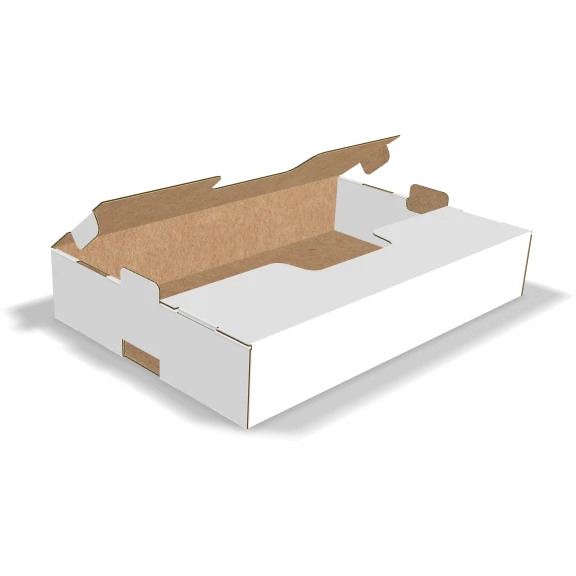
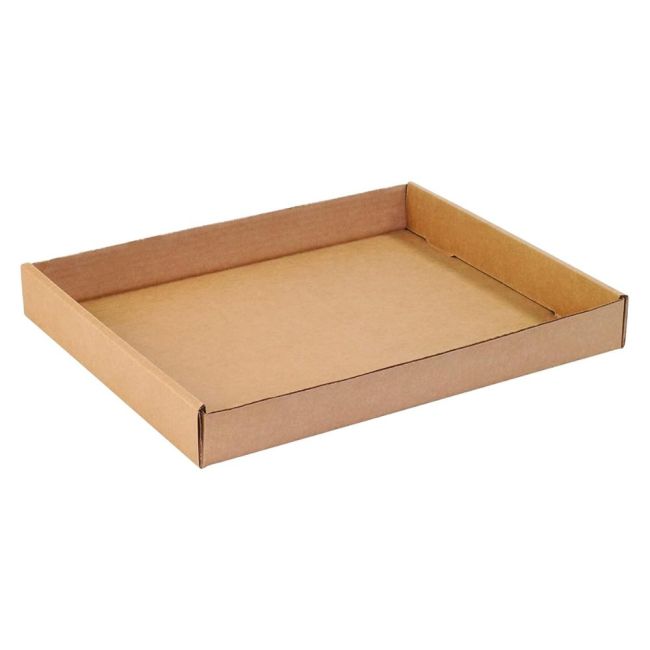



Stackable corrugated display cartons group packaged goods for retail presentation. Discuss the carton footprint, display opening and stacking arrangement around your products and shelf or pallet space. Share the units per carton and filled weight so Suneco Box can review panel support, board construction and sample requirements.
Stackable corrugated display cartons combine retail presentation with a structure planned for repeated units and organised replenishment:
Display opening: A front or top opening presents the merchandise while the remaining panels help contain the packed products.
Pack arrangement: The carton footprint should match the product dimensions, unit count and shelf or pallet space available.
Stack support: Corners, ledges and locating tabs can be developed to carry the intended arrangement. Confirm performance using filled samples.
Shelf identification: Printed panels can show product details and stock information while keeping the display opening clear.
Board construction: Select the paperboard and folds for the total load, handling route and conditions in store.
Develop the display carton as part of the complete packing and merchandising process. Review these points when specifying a new design:
Product grouping: Provide the packed dimensions and the intended number of units per carton. Check the loading sequence so products can be arranged without forcing them against the walls.
Opening profile: Decide how shoppers will reach the contents. Partial top panels or a lower front can provide access while retaining areas needed for the structure.
Stack layout: State the proposed number of tiers, filled weight and supporting surface. Alignment features must work with the carton above and should be checked under representative loading.
Artwork areas: Keep logos, labels and barcodes away from slots, folds and covered panels. Review a printed proof to confirm orientation when cartons are stacked.
Distribution requirements: Explain whether the display travels inside an outer carton or is loaded directly on a pallet. Protection during transit and presentation in store may require different arrangements.
A display carton should be easy to fill, locate and replenish. Balance the opening needed for product access with the structure needed to maintain an orderly display.
Stackable corrugated display cartons are planned around a repeated retail pack arrangement. The carton footprint should fit the product group and available display area. A suitable stacking structure depends on filled weight, panel geometry and the number of tiers. Position printed information where it remains readable after assembly. Agree the board specification and sample checks before production.
Review loaded samples before confirming the design. Check assembly and product access alongside the stability of the complete display. The internal space must allow for the chosen unit count. Any locating tabs or ledges should align without crushing the panels. Confirm print positions and barcode visibility in the intended retail orientation. Select corrugated board for the complete load and environment. Record the agreed packing arrangement and handling instructions in the final specification.
Send Suneco Box your product dimensions, units per carton, filled weight and proposed display arrangement to discuss a stackable carton.
Define your corrugated display carton around the packed product, shelf position and handling route. The specification below identifies the information needed to develop and quote a suitable carton.
Retail-ready display cartons can be considered for packaged retail goods, promotional assortments and shelf replenishment. Suitability depends on the product size, filled weight and conditions of use.
Final dimensions, board grade, artwork and stacking requirements should be confirmed against an approved sample before production. Commercial terms are agreed in the quotation.
| Item | Stackable corrugated display carton |
| Material | Corrugated board; liner, flute and any surface treatment to be selected for the load and use conditions |
| Size | Custom internal length, width and wall height, based on product dimensions and units per carton |
| Color | Unprinted or printed to approved artwork; printing process to be confirmed |
| Printing Area | Front and side panels as agreed on the carton dieline; allow clearance around folds and slots |
| MOQ | Confirmed with the carton size, material, printing and order quantity |
| Design | Product-specific carton structure and artwork, subject to sample approval |
| Samples fee | Sample availability, cost and delivery to be confirmed before ordering |
| Payment | Payment terms stated in the agreed quotation |
| Advantage | Product access combined with a stackable structure developed for the specified display layout |
| QC | Dimensions, assembly, print and filled-carton performance checked against the approved specification |
| Delivery time | Production and shipping schedule confirmed after specification and artwork approval |
Specify a stackable display carton around the merchandise, store layout and replenishment process. Consider these practical points:
Load path: Describe the filled weight and planned tiers. Supporting panels and locating features need to work as a complete structure, so review a loaded sample before agreeing the stack arrangement.
Customer access: Choose the opening around the way shoppers select products. Partial top panels can retain useful support areas, but must not obstruct the contents or essential printed information.
Assembly sequence: Test folding and locking with the staff or equipment used for packing. Confirm that the carton can be filled consistently and that tabs remain engaged after handling.
Replenishment: Plan how empty cartons will be removed and replacement stock added. The display should remain orderly as products are taken out, with labels visible from the intended viewing direction.
Transit protection: Decide whether an outer carton, pallet wrapping or other protection is needed before retail display. Describe moisture exposure and storage conditions when requesting the board specification.


A stackable corrugated display carton groups merchandise into a repeatable retail unit. Open sections provide access to the contents while corners, ledges and other supporting panels form the structure. The design should fit the product group and the space available in the intended display.
Develop the pack arrangement before choosing outside dimensions. The filled weight, number of tiers and supporting surface affect the proposed stacking design. Artwork and stock labels should remain visible after assembly and replenishment.
Confirm the construction with loaded samples before production. Send Suneco Box the packed product size, unit count, display layout, handling route and print requirements to discuss a suitable specification.